
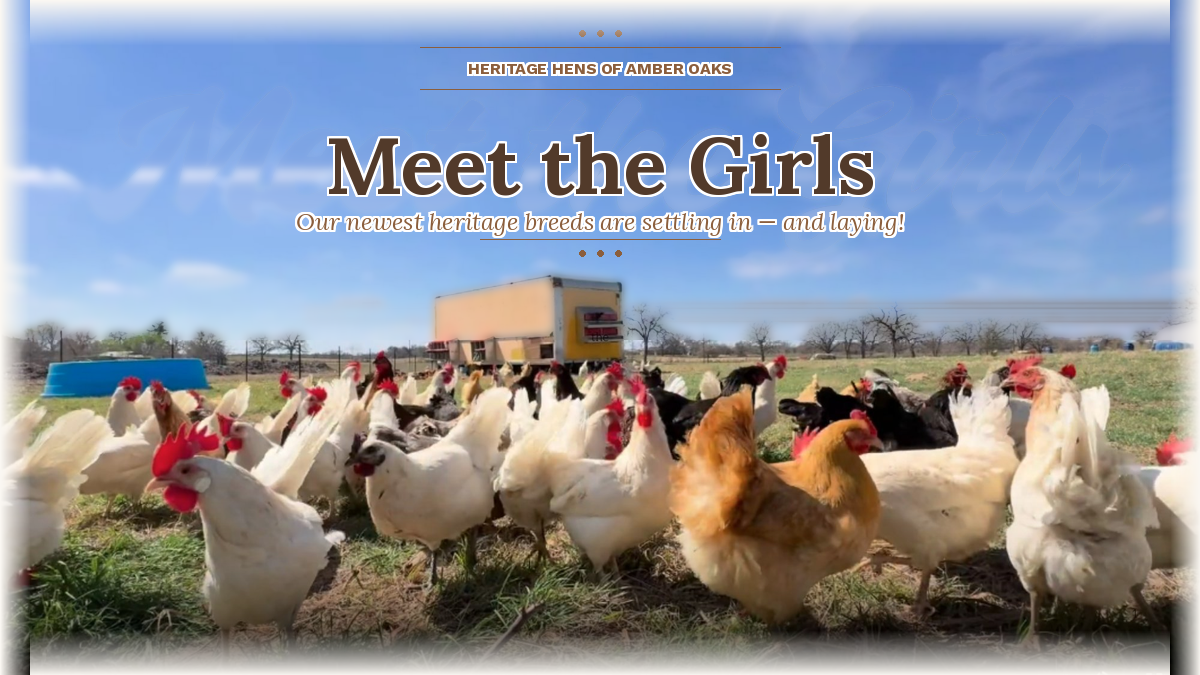

If you crack open a carton from us this week and see a white egg sitting next to the browns, I promise — nothing has gone wrong. In fact, it’s something we’ve been waiting on for a while.
Some of you might remember last summer when we were in full scramble mode (still not apologizing for that pun). The bird flu shortage had made it nearly impossible to source new layers, and egg demand was higher than we’d ever seen. So we brought in 500 pullets as quickly as we could just to stabilize supply. They did exactly what we needed them to do. Steady. Reliable. Beautiful brown eggs. But they were all the same production breed — efficient girls bred to lay consistently and keep up with commercial demand.
This time, we decided to slow it down and do something a little different.
A few weeks ago, we brought home a batch of heritage breed hens. The kind your grandparents would recognize. The old, sturdy bloodlines that haven’t been optimized just for volume, but for resilience and foraging ability and personality. And oh, do they have personality. They’re curious. They wander farther. They scratch with purpose. They act like chickens are supposed to act.
And now… they’ve started laying.
White eggs. Soft cream. Light brown. Occasionally a soft pinkish beige that almost makes you stop and admire it before you crack it.
The yolks are deep orange — the kind that stand tall in the pan. You can taste it: sunshine, greens, real forage. Eggs from hens living like hens.
For us, this batch feels like a small return to something older and steadier. Less “production.” More “heritage.” And we’re pretty excited to share that with you.
Here’s a quick look at the breeds we brought in and what makes each one unique:

You’re also going to notice a subtle shift when you open your cartons.
Instead of all deep brown eggs from our Production Reds, you’ll start seeing more variation — bright whites from the Leghorns, soft cream tones from the Sussex, light brown and pinkish beige from the Orpingtons, alongside the familiar browns from the Australorps and our older girls. No two cartons will look quite the same anymore — and we love that.
The shells may vary in shade, but what’s inside hasn’t changed. Crack one open and you’ll still see those rich, dark orange yolks — thick, vibrant, and full of flavor from hens spending their days on pasture.
It’s not a dramatic rainbow. It’s a natural one — and it reflects a more diverse, resilient flock.

The heritage hens are still settling in — learning the pasture, finding their favorite dust-bathing spots, figuring out where the good bugs hide. But their personalities are already coming through.
They’re curious. A little independent. Not quite as “march in formation” as our production girls.
We’ll keep sharing photos and updates as they get fully into rhythm, but in the meantime, keep an eye on your cartons over the next few weeks. When you spot that bright white egg tucked in among the browns, you’ll know the new girls are officially settling into their rhythm.
And we couldn’t be happier to have them here.
Catch Up on the Journey
A few stories from the archives:
Expanding Egg Production — June 2025
The 500-pullet saga and the H5N1 supply crunch
Moving on Up — August 2025
Building Egg Mobile 2.0
Eggstraordinary Eggs — September 2024
How we raise our hens and why our yolks look the way they do.
Enough about us — we want to hear from you!
If you’ve been cooking with our eggs or meats, we’d love to see what you’re making.

Ready to stock up?
Here’s where you can find us this week:

Speaking of eggs — here’s a little something to make your next dozen even sweeter:

That’s the latest from the ranch — and before you go, we’ve got a quick favor to ask:
Be well,
stay safe,
John & Molly


